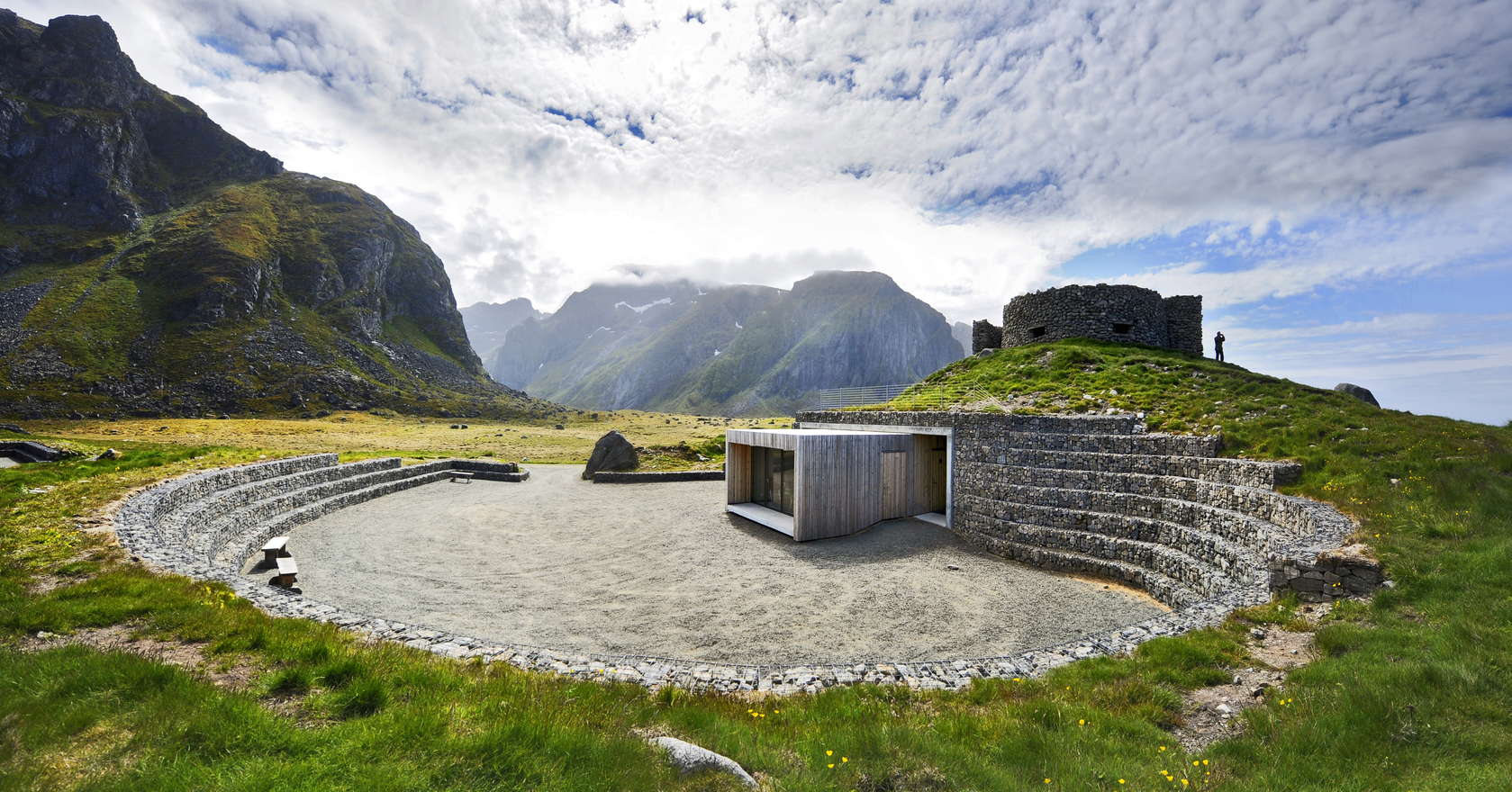

Following up on last year’s round up of gabion façades, we bring a fresh collection of this alternative building technique. Originating as a tool for civil engineering, the gabion wall dates back to the late 1800s. It slowly made its transition to architecture because of its superior strength and permeability. The gabion wall consists of a metal mesh cage filled with loose material, usually stones, sand or soil. The wall is crack resistant and contours to the grade of the site. The material used to fill the cages determines how porous the wall is, a feature often used to create a natural cooling effect. Architects prize the gabion wall, traditionally used as a landscape material, for its bold, textured look. Unlike the orderly rock wall, gabion walls provide a feeling of accidentality to a building, allowing the eye to explore the irregular shapes and patterns. They are often used as exterior walls to provide a rugged, outdoor aesthetic, but are also exposed in the interior, merging the two both materially and environmentally. Fire Station Fleres by Roland Baldi architects, Trentino-Alto Adige, Italy The design of this striking fire ... , Alden Rose, read more http://ift.tt/2aJDaI7


Yorumlar
Yorum Gönder